How to Avoid Unethical Polygraph Examiners and Fraudulent Credentials
In this blog, we will address a difficult but necessary truth: dishonesty exists in every profession, including the field of polygraph examination.
While people often seek polygraph testing to uncover the truth, few stop to ask an equally important question: How do you know the examiner you hire is being truthful about their own credentials, experience, and background?
Choosing the wrong examiner can cost you far more than money. It can affect your career, your reputation, your relationship, your custody case, or your future. Whether you are seeking a polygraph test for a relationship issue, a custody matter, a criminal allegation, or an employment concern, the credibility of the polygraph examiner administering your lie detector test or polygraph test matters just as much as the results themselves.
An Important Legal Disclaimer
The opinions expressed in this blog are solely those of the author and are based on publicly available information, professional experience, and personal analysis. This content is provided for informational and educational purposes only and should not be construed as legal advice, professional certification, or a statement of fact regarding any specific individual.
No individuals are named in this blog. Any references to conduct, credentials, representations, or practices are generalized descriptions intended to highlight industry-wide concerns. Any resemblance to specific persons, living or deceased, is coincidental and unintentional.
Statements regarding misrepresentation, unethical conduct, or lack of qualifications reflect the author’s opinion and interpretation of publicly accessible claims, marketing materials, and professional standards. Readers are encouraged to conduct independent research and due diligence before hiring any examiner or investigative professional.
This blog does not assert criminal wrongdoing by any individual. Its purpose is to promote transparency, ethical practices, and informed decision-making within the polygraph and investigative services industry.
Lying Is Not New, But It Becomes Dangerous in a Professional Setting
Lying has existed for centuries. History, faith, and moral teachings consistently show that dishonesty damages trust and ultimately harms both the liar and those who believe the lie.
People lie for many reasons:
To protect themselves
To avoid consequences
To gain status or recognition
To secure money or contracts
To elevate their image
There is a critical line that should never be crossed. When a professional fabricates credentials, exaggerates investigative experience, misrepresents law enforcement service, or takes credit for cases they were never involved in, it is no longer a harmless exaggeration but a form of misrepresentation, and in some cases, credential fraud.
The people who suffer most are not always the ones telling the lie. Often, it is the client who believes the lie:
The spouse seeking truth in a marriage
The parent in a custody dispute
The employee facing termination
The individual is trying to protect their reputation
When you hire an examiner whose experience does not match their claims, you are the one who carries the risk.
Misrepresentation in the Polygraph Profession
Outside the military context, people sometimes loosely use the term “stolen valor” to describe false claims of earned credentials.
In professional settings, similar behaviors are more accurately described as:
Impersonation
Credential fraud
Misrepresentation
False claims of experience
Fabricated investigative involvement
Examples seen across industries include:
Claiming law enforcement or federal experience was never earned
Implying investigative authority without having served as a sworn officer
Taking credit for high-profile investigations without actual involvement
Suggesting participation in cases through media appearances without clarification
The harm is significant because public trust is exploited, earned credentials are disrespected, and clients are misled.
Why Competition Can Fuel Unethical Behavior
The polygraph profession is a specialized field. It requires formal education, certification, continuing training, and significant discipline. However, it is also highly competitive.
Examiners compete for:
Government contracts
Private clients
Association leadership positions
Media exposure
Awards and recognition
In competitive environments, some individuals may exaggerate experience, inflate resumes, or present themselves as something they are not in order to gain an advantage.
That is precisely why the burden falls on the public to verify what is being claimed.
Private Investigator vs. Sworn Law Enforcement Investigator
The public must understand the difference between a private investigator and a sworn law enforcement investigator, detective, or federal agent.
A sworn law enforcement investigator attends a formal academy, works complex criminal cases, writes reports, testifies in court, makes arrests, and is held to strict accountability standards. Over years or decades, that experience becomes invaluable in assessing credibility, behavior, and investigative context.
A private investigator who has never served in sworn law enforcement does not have that same foundation. In many states, private investigator licensing may require minimal training hours compared to a full law enforcement career.
Yet some examiners heavily imply investigative authority through vague language, titles, or marketing narratives that suggest backgrounds they do not possess. This is where careful reading matters.
If someone’s website implies deep criminal investigative experience, ask:
Were they a sworn law enforcement officer?
What agency did they serve with?
For how long?
In what capacity?
Transparency should never be difficult to obtain.
False Credit and Misrepresented Experience
Another concerning practice involves examiners implying involvement in high-profile cases through media appearances, podcast commentary, or visits to crime scenes. Providing commentary is not the same as participating in an investigation, and visiting a location is not the same as working a case. When marketing materials blur those distinctions without clear disclaimers, they can create a false impression for potential clients.
If an examiner is willing to misrepresent their role publicly, it is reasonable to question whether that same lack of transparency could affect your examination.
Boards, Titles, and Leadership Positions Do Not Guarantee Ethics
Many examiners sit on boards, hold leadership titles, or occupy positions of influence within professional associations. While those roles may reflect involvement in the profession, they do not automatically guarantee competence, ethics, or fairness in your individual examination.
Titles alone do not determine:
Experience
Ethical conduct
Skill in examination technique
Commitment to the examinee
Your case will not be decided by someone’s position within an association. It will be determined by their training, investigative background, professionalism, and integrity.
How to Choose a Qualified Polygraph Examiner
If you are considering a polygraph test, take the following steps before hiring a polygraph examiner to ensure the results are credible and professionally administered:
Research the examiner’s full professional background
Verify claimed law enforcement service
Read reviews and independent references
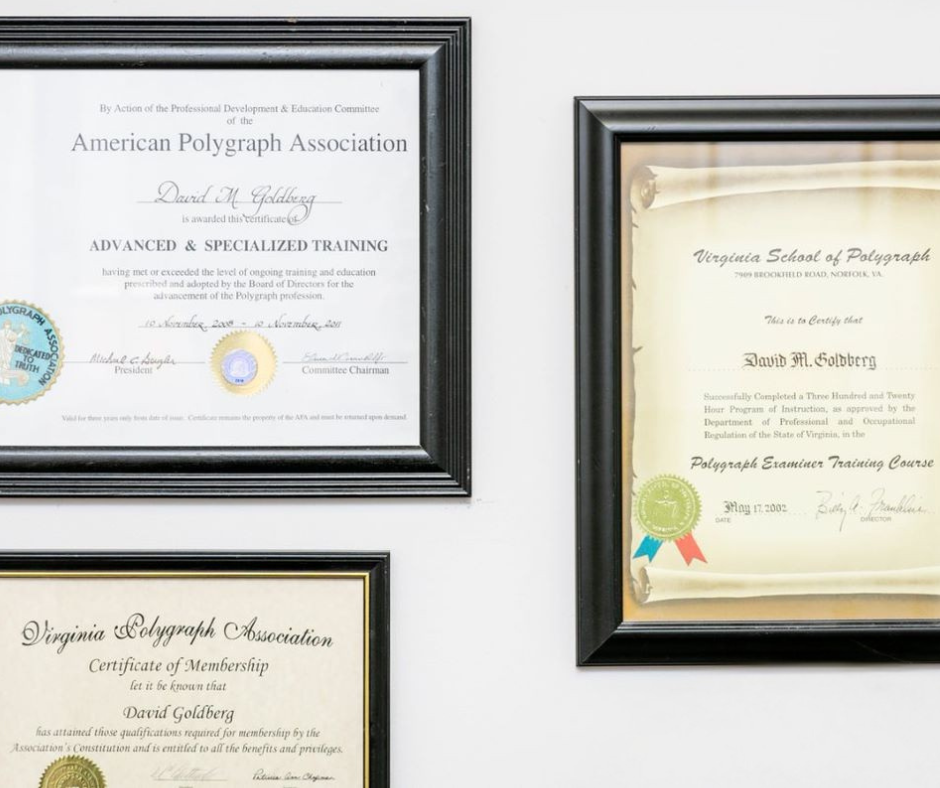
Ask direct questions about training and certification
Look for transparency, not vague self-promotion
Be cautious of dramatic marketing or inflated biographies
Do not allow fear, urgency, or emotional distress to rush your decision. Your future may depend on the quality and integrity of the examiner you choose.
An inexperienced or poorly trained examiner increases the risk of inconclusive polygraph test results, which often leave individuals in a worse position than before the examination was conducted.
There Are Ethical Polygraph Examiners. Find Them.
There are ethical professionals in this field who conduct examinations for the right reasons, to uncover truth, provide clarity, protect the innocent, and support informed decisions. Seek examiners who prioritize the examinee, not their own status, titles, or influence.
If you are unsure how to choose a polygraph examiner, reviewing credentials, experience, and investigative background carefully can make the difference between clarity and further confusion.
When the Truth Matters, Choose Experience and Integrity
Executive Protection Group Polygraph Service is committed to ethical practice, transparency, and real investigative experience.
If you need a professional, authentic, and empathetic polygraph examination conducted by a Virginia State-Licensed, Advanced Board-Certified Polygraph Examiner with decades of investigative and polygraph experience, do not hesitate to reach out to us at (757) 495-1301.
Your reputation, your family, and your future deserve more than inflated credentials or marketing exaggeration. They deserve the truth.
When the truth matters, so does the examiner you choose.
