When you are trying to find answers to a serious, personal, or potentially life-changing issue, the testing method you select matters. The experience and training of the person administering that test matter just as much.
Two methods are frequently discussed in the field of credibility assessment: traditional polygraph testing, commonly called a lie detector test, and Computer Voice Stress Analysis, commonly known as CVSA.
Although the two are sometimes presented as interchangeable, they are not the same. They use different technology, measure different responses, require significantly different levels of initial training, and have very different bodies of research behind them.
In this blog, we will take a closer look at:
How polygraph testing and CVSA work
The history of each testing method
Examiner education and continuing training
What independent research has found
How nervousness, anxiety, and stress should be handled
What to consider before trusting an examiner with an important decision
My goal is to provide the information you need to conduct your own research and make an intelligent, informed decision for yourself or someone you care about.
An Important Note About Credibility Testing
Neither a polygraph instrument nor a CVSA computer directly detects a lie.
A professional polygraph records physiological responses while an examiner administers a structured testing procedure. CVSA is marketed as analyzing stress-related patterns or changes within a person’s voice.
The interpretation of either test depends heavily on the procedure used, the questions asked, the examiner’s training, and the examiner’s professional judgment.
No credibility assessment should be treated as a magical machine that can read someone’s mind. The qualifications and integrity of the examiner are essential.
A Brief History of Polygraph Testing
The development of polygraph testing began with scientific efforts to understand how the human body responds to stress and deception.
Early research included experiments involving blood pressure and other physiological measurements. Psychologist William Moulton Marston developed a systolic blood pressure test that later influenced the development of polygraph testing.
In 1921, John Augustus Larson, a police officer and Ph.D. student at the University of California, Berkeley, developed an instrument that recorded multiple physiological responses. His device measured cardiovascular activity and respiration and became an important predecessor to the modern polygraph.
Leonarde Keeler, who worked with Larson, later improved the design and patented the Keeler Polygraph in 1931. His work helped move polygraph testing toward the instrument and professional field recognized today.
One correction is important when discussing the history of polygraph evidence. The well-known 1923 case involving an early systolic blood pressure deception test was Frye v. United States. It was decided by the Court of Appeals for the District of Columbia, not the U.S. Supreme Court. The case later became influential in determining how courts evaluate scientific evidence.
Modern computerized polygraph instruments record several physiological channels, generally including respiration, cardiovascular activity, and electrodermal activity. These measurements are evaluated as part of a complete examination process, not as isolated signs that automatically prove whether someone is lying.
Polygraph testing has now been used and studied for more than a century. Its techniques, equipment, scoring systems, examiner standards, and professional practices have continued to develop during that time.
A Brief History of Computer Voice Stress Analysis (CVSA)
Voice stress analysis technology emerged decades after the development of the polygraph.
An earlier system known as the Psychological Stress Evaluator was introduced during the 1970s. Later systems expanded on the idea that psychological stress might create measurable changes within the human voice.
The Computer Voice Stress Analyzer became commercially available in 1988, according to its manufacturer. CVSA technology is marketed as identifying stress-related vocal patterns that are not normally detectable by the unaided human ear.
The system records a person’s voice and converts features of the recording into patterns or charts. A trained operator then interprets those patterns while considering the questions that were asked.
The theory behind CVSA is that deception may create psychological stress, which may then affect vocal characteristics. The problem is that stress and deception are not the same thing.
A person’s voice can change because of fear, anger, embarrassment, frustration, anxiety, confusion, trauma, or the seriousness of an accusation. Those emotions can occur in both truthful and deceptive people.
That distinction is extremely important.
How Polygraph Testing and CVSA Differ
The primary difference between these methods is what they record and analyze.
Polygraph testing records multiple physiological responses
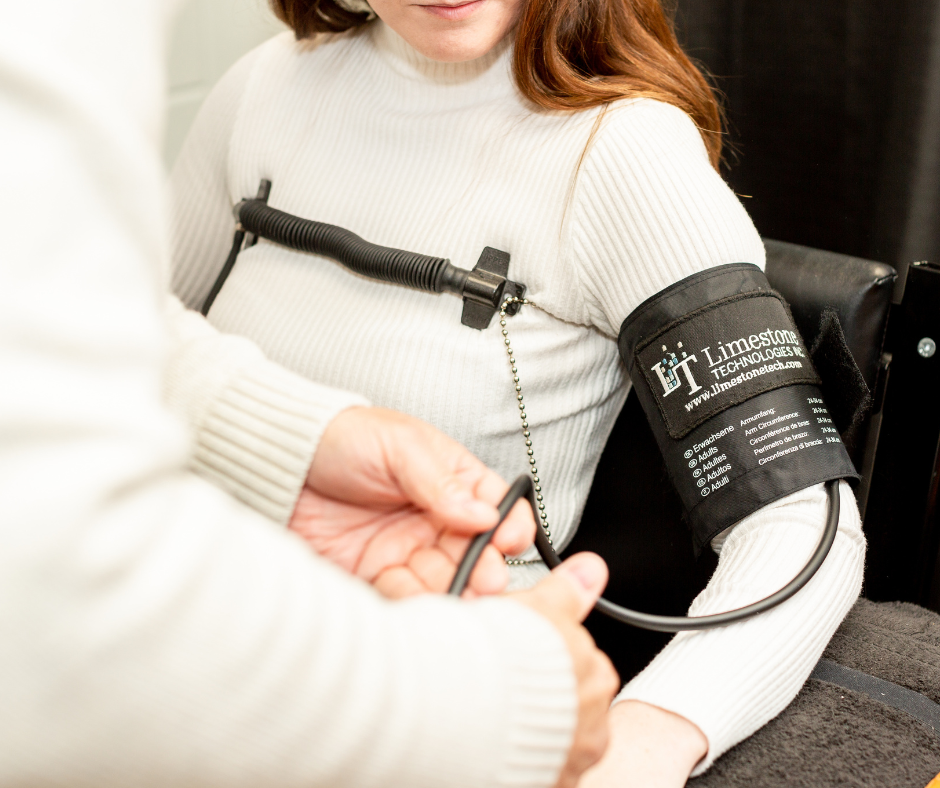
A professional polygraph examination generally records several physiological activities at the same time, including:
Respiration
Cardiovascular activity
Electrodermal or sweat-gland activity
The examiner evaluates these recorded responses across a structured series of questions and test charts. The decision is not supposed to be based on one moment of nervousness, one movement, or one change in the examinee’s voice.
CVSA analyzes features of the voice
CVSA focuses on vocal information. The technology is marketed as identifying voice patterns associated with stress that may indicate deception.
That creates a significant concern: people experience vocal changes for many reasons that have nothing to do with lying.
Someone who is falsely accused of molesting a child, cheating on a spouse, stealing money, or committing another serious act may understandably become angry or emotional when asked about it. Their voice may become louder, softer, higher, lower, strained, or unsteady.
That reaction does not automatically mean the person is lying. It means the person is experiencing an emotional or physiological response.
What Independent Research Has Found About Voice Stress Analysis
Marketing claims should never be the only information considered when evaluating a credibility assessment method. Independent research matters.
A National Institute of Justice-funded field study evaluated two voice stress analysis programs in a real-world jail environment. The programs were used to evaluate whether participants were truthful about recent drug use.
The study found that the voice stress systems achieved an overall accuracy rate of approximately 50 percent in that specific setting. The systems identified only about 15 percent of the participants who lied about recent drug use. Researchers concluded that the results were approximately equivalent to chance for detecting deception in that study.
The National Academies has also reviewed voice stress analysis research and found that the evidence supporting its accuracy was limited.
This does not mean that no agency has ever used CVSA. Some law enforcement and correctional agencies do use voice stress technology for investigations, applicant screening, or interviews.
However, the number of agencies purchasing or using a product is not the same as independent scientific proof that the product can reliably distinguish stress from deception.
That is why anyone considering CVSA should look beyond advertising and ask direct questions about independent research, examiner training, error rates, quality control, and how conclusions are reached.
Polygraph Examiner Training vs. CVSA Training
One of the most important differences between the two fields is the level of initial examiner education.
Polygraph examiner education
Polygraph examiners who graduate from an American Polygraph Association-accredited basic training program complete at least 400 hours of specialized polygraph instruction.
This education addresses areas such as:
Psychology
Physiology
Polygraph instrumentation
Test-question construction
Interviewing
Chart analysis
Professional ethics
Research and methodology
Practical examinations
Federal polygraph examiners receive similarly extensive preparation. The National Center for Credibility Assessment currently provides a 12-week Psychophysiological Detection of Deception program for federal partner agencies, along with continuing education, research, technical support, and program oversight.
Depending on the examiner’s jurisdiction and professional organization, additional internship, licensing, examination, supervision, or continuing education requirements may apply.
The American Polygraph Association requires practicing examiners to complete at least 30 hours of continuing education every two years. Examiners must also comply with any separate continuing education requirements imposed by their states.
CVSA examiner education
According to the CVSA manufacturer, its initial certified examiner course is five days. The manufacturer also states that there is no internship requirement and that recertification is required every two years.
It would therefore be inaccurate to say that CVSA operators receive no recertification at all. However, there is still a substantial difference between a five-day initial CVSA course and the hundreds of hours required to complete an accredited polygraph examiner program.
Readers should consider that difference carefully.
When a decision could affect a relationship, a career, a criminal accusation, child custody, family stability, or someone’s reputation, you should know exactly how the person evaluating you was trained.
Nervousness Does Not Automatically Mean Deception
After more than two decades as a licensed and advanced board-certified polygraph examiner, and after administering more than 20,000 examinations, I can tell you that nearly everyone arrives nervous.
Truthful people become nervous. Deceptive people become nervous.
People become nervous because they have never taken a polygraph examination before. Some are naturally anxious about any type of testing. Others are afraid they will not be believed, even though they are telling the truth.
Some examinees have anxiety disorders, trauma histories, medical conditions, or prescriptions they are concerned may affect the examination. Others are simply uncomfortable discussing a sensitive accusation with someone they have never met.
Nervousness is normal. It should never be treated as automatic proof of deception.
A qualified polygraph examiner should carefully review the examinee’s medical history, medications, physical condition, psychological condition, and ability to understand and participate in the examination. The examiner should also explain the procedure and review every relevant test question before collecting any charts.
No reputable examiner should fail someone merely because the person appears nervous or because their voice changes while discussing an emotional subject.
Voice Fluctuation Is Not the Same as Lying
Think about conversations you have had with your children, friends, spouse, coworkers, or family members.
When people are angry, frightened, offended, or frustrated, their voices change. Their tone may become sharper. Their pitch may rise. Their speech may become slower or faster. Their voice may crack.
Does every vocal change mean the person is lying? Of course not.
Imagine being asked whether you harmed your own child when you know you did not. A truthful person may become visibly angry or emotionally distressed simply because of the accusation. That response should not automatically be interpreted as deception.
This is one of my most serious concerns regarding any method that depends primarily on identifying stress within a person’s voice. Stress may be present, but the examiner still needs a scientifically defensible way to determine why it is present.
Cost and Convenience Should Not Determine Your Choice
Some agencies may choose voice stress technology because the equipment and initial training can be less expensive and less time-consuming than establishing a professional polygraph program.
A CVSA setup may involve a computer, software, and microphone. A professional polygraph instrument uses multiple physiological sensors and requires far more extensive initial examiner education.
Convenience, however, should not be confused with reliability.
When the issue is serious, your first questions should not be:
Who can see me immediately?
Which test is the cheapest?
Which machine looks the newest?
Which appointment is the shortest?
Instead, you should ask:
What formal education did the examiner complete?
Was the training program professionally accredited?
Is the examiner licensed where licensing is required?
Does the examiner participate in continuing education?
How much experience does the examiner have with my specific issue?
Will the questions be reviewed with me before the test?
Will I receive a professional written report?
Can the examiner provide current credentials and training certificates?
What research supports the testing method being used?
A professional should be willing to answer all of these questions clearly and provide evidence of current qualifications.
Can Polygraph or CVSA Results Be Used in Court?
The legal use of credibility assessment results is complicated and depends on the jurisdiction, type of case, purpose of the examination, agreement of the parties, and decision of the court.
There is no universal rule stating that every polygraph result is admissible or that every result is prohibited. The U.S. Department of Justice notes that neither the United States Code nor the Federal Rules of Evidence contains one specific provision governing the admissibility of polygraph results.
Anyone considering a test for a criminal matter, family court case, employment dispute, or custody issue should speak with a qualified attorney before assuming that the result will be admitted as evidence.
An ethical examiner should never guarantee that a court, attorney, agency, employer, or other third party will accept the result.
Which Method Would I Choose?
For a serious private issue, I would choose a properly conducted polygraph examination administered by a highly experienced, licensed, and continually trained examiner.
That recommendation is not based simply on the fact that I am a polygraph examiner. It is based on the difference in examiner education, the number of physiological channels recorded, the structured testing process, the long history of professional development, and the concerns raised by independent research involving voice stress analysis.
No testing method is infallible, including polygraph testing. That is precisely why examiner qualifications, proper procedures, validated techniques, quality control, and carefully written questions are so important.
You are not simply choosing a machine. You are choosing the person who will formulate the questions, collect the information, interpret the data, and provide a conclusion that may have a lasting effect on your life.
How to Choose an Examiner You Can Trust
Before scheduling an examination, conduct your own research. Do not automatically select the first person who answers the phone, offers the lowest price, or promises to test you immediately.
Review the examiner’s:
Formal education
Polygraph-school credentials
Professional memberships
State licensing status
Advanced training
Continuing education
Years of experience
Number of examinations completed
Experience with your particular testing issue
Professional reputation
Ask to see current credentials. A qualified professional should be willing to display their education and certifications proudly.
You should also be cautious of anyone who guarantees a specific result before meeting you or claims that their equipment is completely incapable of error.
Professional credibility requires honesty about both the capabilities and the limitations of the examination.
Make an Informed Decision
The decisions you make when seeking answers may affect you and the people you care about for years to come. Do not take those decisions lightly.
Research the testing method. Research the examiner. Ask about training, professional standards, experience, and continuing education. Do not settle for the fastest or cheapest option simply because it is convenient.
When your reputation, family, relationship, employment, or future is involved, experience matters.
